
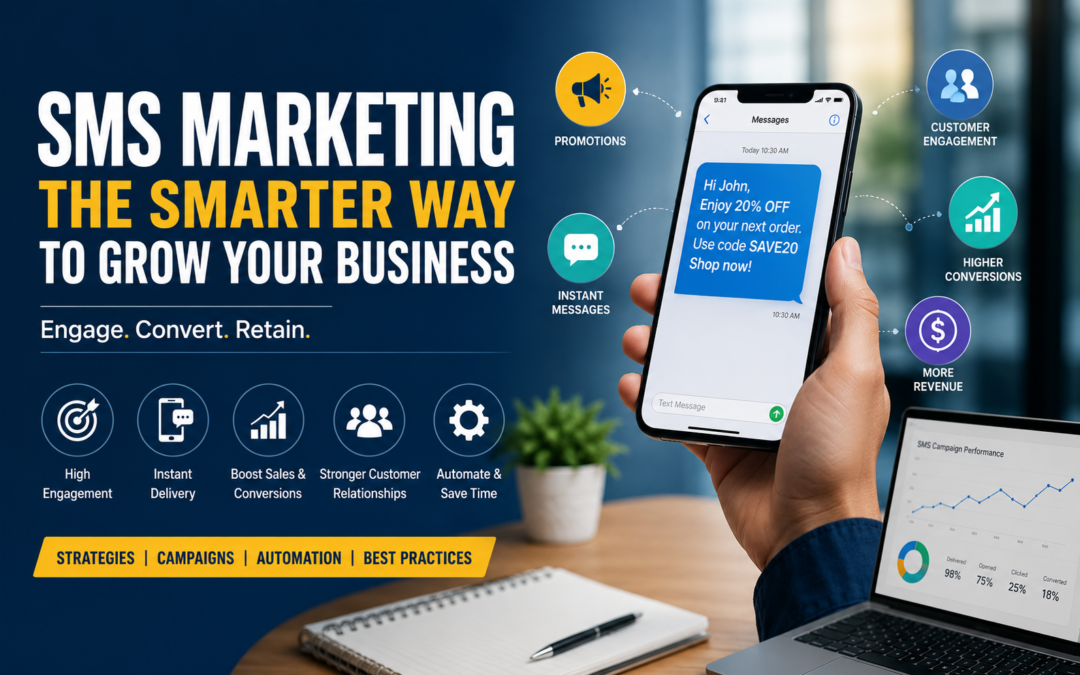
What is SMS Marketing?
SMS marketing is a digital marketing strategy that allows businesses to communicate directly with customers through text messages. Companies use SMS marketing to send promotional offers, product updates, appointment reminders, order notifications, and personalized messages.
Unlike email marketing, SMS messages are delivered directly to a customer’s mobile phone, making them one of the fastest and most effective communication channels available today.
As mobile usage continues to grow worldwide, SMS marketing has become an essential tool for businesses looking to improve customer engagement and increase sales.
Why SMS Marketing Matters in 2026
Consumers spend more time on mobile devices than ever before. Businesses need communication channels that are fast, direct, and highly visible.
SMS marketing offers several advantages:
- Instant message delivery
- High customer visibility
- Direct communication channel
- Better engagement opportunities
- Increased customer retention
- Faster response rates
Businesses across retail, healthcare, education, finance, travel, and eCommerce industries are actively using SMS campaigns to connect with their customers.
Key Benefits of SMS Marketing
1. Direct Customer Communication
SMS allows businesses to reach customers instantly without relying on social media algorithms or crowded email inboxes.
2. Improved Customer Engagement
Text messages encourage faster interactions because customers can read and respond within seconds.
3. Increased Sales Opportunities
Promotional campaigns, flash sales, discount codes, and product launches can generate immediate customer action.
4. Better Customer Retention
Regular updates and personalized communication help businesses maintain long-term customer relationships.
5. Cost-Effective Marketing
Compared to many traditional marketing methods, SMS campaigns can deliver strong returns while keeping marketing costs manageable.
Types of SMS Marketing Campaigns
Promotional SMS
Used to promote products, services, discounts, and special offers.
Example:
“Get 20% off on your next purchase. Offer valid until Sunday. Shop now.”
Transactional SMS
Used to provide important customer updates such as:
- Order confirmations
- Payment confirmations
- Delivery notifications
- Appointment reminders
Customer Feedback SMS
Businesses can collect reviews and feedback directly through SMS.
Example:
“Thank you for your purchase. Please rate your experience from 1 to 5.”
Loyalty Program Messages
Reward customers with exclusive offers, loyalty points, and membership benefits.
Event and Webinar Reminders
Businesses can use SMS to increase attendance for online and offline events.
How SMS Marketing Works
A successful SMS marketing campaign generally follows these steps:
Step 1: Build an Opt-In Subscriber List
Customers must provide permission before receiving promotional SMS messages.
Step 2: Segment Your Audience
Group customers based on:
- Location
- Purchase history
- Interests
- Customer behavior
- Engagement level
Step 3: Create Personalized Messages
Personalized SMS messages often perform better because they are more relevant to customers.
Step 4: Schedule or Automate Campaigns
Modern SMS platforms allow businesses to automate campaigns based on customer actions.
Examples include:
- Welcome messages
- Cart abandonment reminders
- Birthday offers
- Re-engagement campaigns
Step 5: Analyze Results
Track important metrics such as:
- Delivery rate
- Click-through rate
- Conversion rate
- Customer response rate
- Revenue generated
SMS Marketing Best Practices
Keep Messages Short and Clear
Customers should understand the purpose of the message immediately.
Include a Strong Call-to-Action
Examples:
- Shop Now
- Claim Offer
- Book Today
- Learn More
Personalize Whenever Possible
Use customer names, purchase history, or preferences to create relevant communication.
Avoid Excessive Messaging
Sending too many messages can lead to customer dissatisfaction and unsubscribes.
Follow Compliance Guidelines
Always obtain customer consent before sending promotional SMS messages.
SMS Marketing Automation
Automation helps businesses communicate with customers at the right time without manual effort.
Popular automated SMS workflows include:
Welcome Series
Sent immediately after customer signup.
Abandoned Cart Recovery
Reminds customers about products left in their shopping cart.
Post-Purchase Follow-Up
Provides order updates and requests customer feedback.
Re-Engagement Campaigns
Reconnects with inactive customers through targeted offers.
SMS Marketing vs Email Marketing
| Feature | SMS Marketing | Email Marketing |
|---|---|---|
| Delivery Speed | Instant | Varies |
| Message Length | Short | Long-form Content |
| Visibility | Very High | Moderate |
| Personalization | High | High |
| Automation | Available | Available |
| Best Use Cases | Urgent Updates & Promotions | Detailed Communication |
The most effective businesses often combine SMS API and email marketing for maximum customer engagement.
Common SMS Marketing Mistakes to Avoid
- Sending messages without customer permission
- Ignoring audience segmentation
- Using generic messages
- Sending messages at inappropriate times
- Not tracking campaign performance
- Overloading customers with promotions
Avoiding these mistakes can significantly improve campaign effectiveness.
Future of SMS Marketing
The future of SMS marketing is becoming increasingly personalized and automated. Businesses are integrating SMS with AI-powered customer journeys, customer relationship management systems, and omnichannel marketing strategies.
As mobile communication continues to evolve, SMS marketing will remain one of the most reliable ways to reach customers directly.
Conclusion
SMS marketing is one of the most effective digital marketing channels for businesses looking to improve customer communication, increase engagement, and drive sales. Whether you are a small business or a large enterprise, implementing a well-planned SMS marketing strategy can help you build stronger customer relationships and achieve long-term growth.
By combining audience segmentation, personalization, automation, and performance tracking, businesses can maximize the impact of their SMS campaigns and stay competitive in today’s mobile-first marketplace.
FAQ’s
Question: What is SMS marketing?
Answer- SMS marketing is a strategy that allows businesses to send promotional and transactional text messages directly to customers’ mobile phones.
Question: Is SMS marketing effective for small businesses?
Answer: Yes, SMS marketing helps small businesses engage customers quickly, promote offers, and improve customer retention.
Question: What are the benefits of SMS marketing?
Answer: Key benefits include direct communication, better engagement, faster response times, improved customer retention, and increased sales opportunities.
Question: How can businesses automate SMS marketing?
Answer: Businesses can automate welcome messages, abandoned cart reminders, order updates, follow-ups, and promotional campaigns using SMS marketing software.
Question: What industries can use SMS marketing?
Answer: Retail, healthcare, education, finance, travel, hospitality, real estate, and eCommerce businesses can all benefit from SMS marketing.