
WhatsApp & Conversational Marketing · Voice 360 · 13 October 2026 · Harender Chaudhary · ~4 min read
Boost Your Business Security with Voice OTP: A Complete Guide by Azmarq
Learn how Voice OTP strengthens business security, eliminates SMS delivery delays, and prevents fraud with instant, reliable automated voice verification for user logins and transactions.
View Voice 360 product →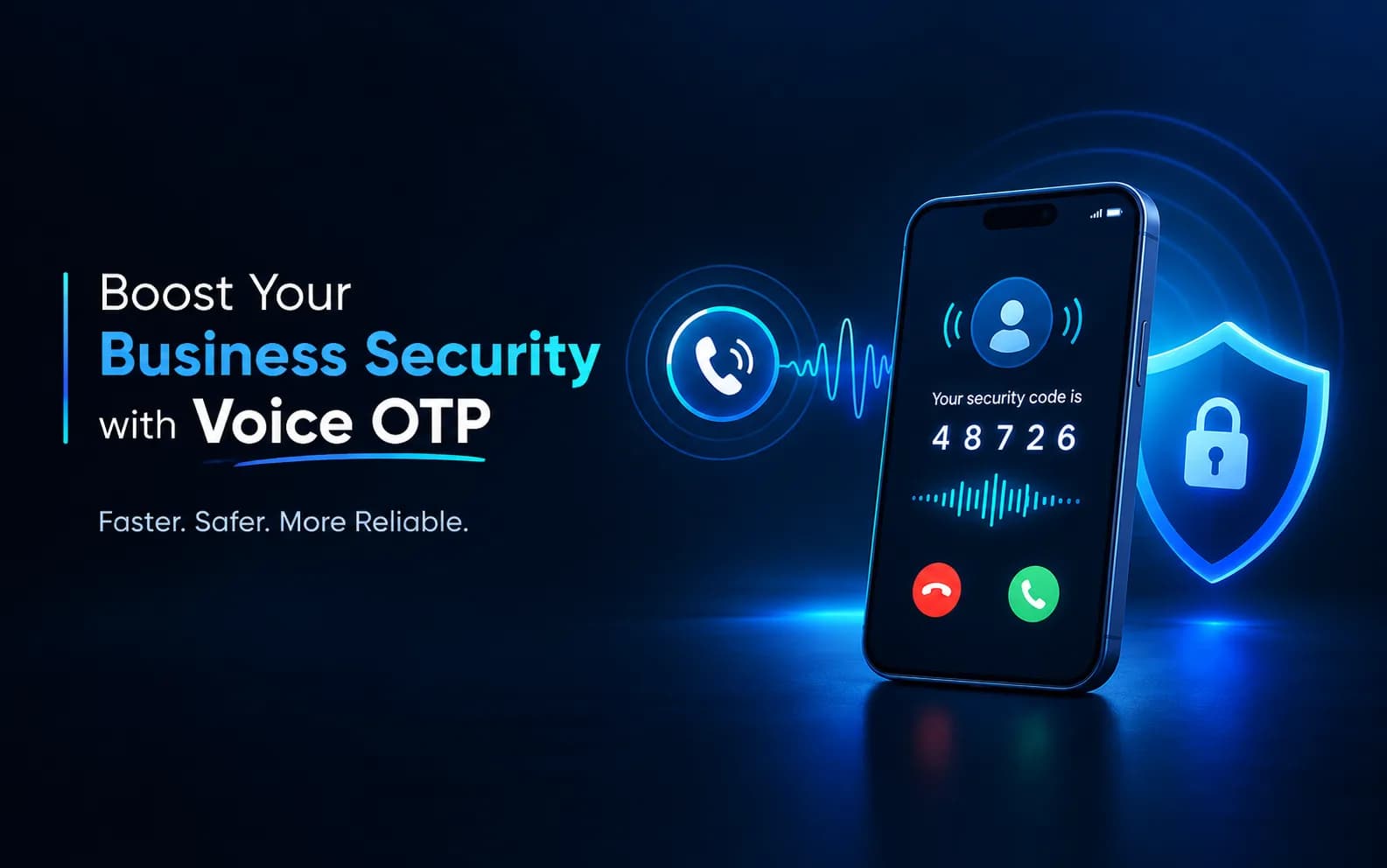
In today's fast-paced digital ecosystem, securing user accounts without friction is one of the biggest operational challenges businesses face. As online fraud, account takeovers, and cyberattacks grow increasingly sophisticated, traditional single-factor authentication is no longer sufficient.
While text-based SMS One-Time Passwords (OTPs) have long been the default standard for multi-factor authentication (MFA), they are becoming increasingly vulnerable to SIM swapping, network delays, and delivery failures.
Enter Voice OTP a faster, highly secure, and reliable authentication alternative. In this comprehensive guide, we will explore what Voice OTP is, how it works, why it beats traditional authentication methods, and how integrating it into your security infrastructure can protect both your business and your customers.
What is Voice OTP?
Voice OTP (One-Time Password via Voice Call) is an automated security authentication mechanism where an interactive voice call delivers a unique, time-sensitive numerical code directly to a user’s phone number.
When a user triggers an action, such as logging in, authorizing a financial transaction, or resetting a password, an automated telephony system immediately dials their registered number and speaks the security code aloud using clear text-to-speech technology.
Unlike standard SMS messages, which rely entirely on cellular message queues, Voice OTP bypasses congested SMS gateways to ensure instantaneous delivery across both mobile networks and landlines globally.
Why Traditional SMS OTPs Are Falling Short
For years, businesses relied heavily on SMS for identity verification. However, changing telecom landscapes and rising cyber threats have exposed major limitations:
- SIM Swapping Attacks: Cybercriminals can manipulate mobile carriers into transferring a target’s phone number to a attacker-controlled SIM card, intercepting text messages instantly.
- Delivery Delays & Drops: High network traffic, local carrier filtering, and international routing issues often lead to delayed or lost SMS messages, leading to user frustration and abandoned sessions.
- Smishing Vulnerabilities: Users are frequently tricked by deceptive phishing SMS messages ("smishing") into giving up sensitive information.
- Limited Accessibility: Traditional SMS requires active cellular data or SMS carrier support, leaving out landline users and regions with poor SMS infrastructure.
Core Business Benefits of Voice OTP
Switching to or combining your authentication setup with Voice OTP offers several immediate advantages for your security framework and customer experience:

1. Superior Security & Fraud Mitigation
Voice OTPs drastically reduce the risk of interception. Because the passcode is spoken dynamically over an active call, bad actors using automated SMS interception tools or SIM-swap scripts face an additional hurdle in intercepting the secret code.
2. Industry-Leading Delivery Rates
While SMS messages can get flagged or queued by telecom carriers, voice calls are routed via real-time voice networks. This results in significantly higher completion rates and lower latency, ensuring your users receive their code within seconds.
3. Global Reach & Landline Compatibility
Unlike SMS, which is bound to mobile phones, Voice OTP works seamlessly across both mobile devices and traditional landline numbers. This makes it ideal for global enterprises, healthcare systems, and B2B platforms catering to diverse user demographics.
4. Accessibility and Inclusivity
Voice OTP accommodates visually impaired users and individuals who struggle with reading text on small screens, ensuring your platform complies with modern accessibility standards.
5. Multi-Language Customization
With advanced voice synthesis, automated voice authentication calls can deliver codes in the user's local language and dialect, driving higher trust and conversion rates in international markets.
Voice OTP vs. Standard SMS OTP: A Direct Comparison
Feature | Voice OTP | Standard SMS OTP |
Delivery Speed | Instant real-time call | Subject to carrier delays |
Landline Support | Yes | No |
SIM Swap Resistance | High | Low |
Global Reliability | High (Voice routes) | Variable (Carrier filters) |
Accessibility | High (Auditory) | Medium (Visual only) |
Common Use Cases Across Industries
Voice OTP authentication is versatile and can be applied across multiple high-security user touchpoints:
- Fintech & Banking: Authorizing high-value wire transfers, credit card transactions, or account password updates.
- E-Commerce & Retail: Verifying high-value purchases, preventing fake account creations, and securing merchant dashboards.
- Healthcare & HealthTech: Protecting sensitive patient records (HIPAA compliance) during login or data updates.
- SaaS & Enterprise Platforms: Enabling two-factor authentication (2FA) for administrative and high-privilege user access.
Best Practices for Implementing Voice OTP
To get the best conversion rates and security outcomes from your Voice OTP implementation, consider these proven strategies:
- Implement Fallback Routing: Use Voice OTP as a reliable fallback when SMS delivery times exceed 10-15 seconds. This drastically reduces user drop-off.
- Clear Audio Formatting: State the code clearly, repeat it twice, and keep background noise minimal to ensure accuracy.
- Set Expiration Timers: Enforce strict expiry windows (e.g., 60 to 90 seconds) to prevent code reuse.
- Limit Attempt Rates: Prevent brute-force attempts by enforcing rate limits on how many calls a user can request within a given time frame.
Secure Your Business Authentication with Azmarq
Modern authentication needs to be swift, frictionless, and rock-solid. By adding Voice OTP to your verification flow, you build a resilient, multi-channel security architecture that prevents fraud while keeping user login times short.
At Azmarq, we provide reliable communication and verification solutions designed to scale effortlessly with your business requirements. Contact our expert engineering team today to learn how easily you can integrate Voice OTP into your application.
Written by

Harender Chaudhary
CPaaS Content Strategist at Azmarq
Harender Choudhary is a digital marketing and customer communication strategist with extensive experience in SEO, performance marketing, digital growth, and technology-led customer engagement. His areas of expertise include CPaaS, WhatsApp Business, conversational communication, SMS, RCS, automation, and omnichannel customer engagement. He focuses on simplifying complex digital communication technologies and exploring how businesses can use automation, messaging platforms, and data-driven marketing strategies to improve customer engagement, generate leads, and drive sustainable business growth.
Related articles
WhatsApp AI Agents vs Chatbots: What Should Your Business Use for Sales, Support & Lead Qualification?
Traditional rule-based chatbots often fall short when dealing with dynamic customer queries. Discover how context-aware AI agents on WhatsApp outperform traditional bots in lead qualification, sales conversion, and multi-channel support.
Is WhatsApp Business No Longer Free? The New Meta Update Every Brand Needs to Know
Meta has officially rolled out major structural updates to its WhatsApp Business API pricing-introducing paid service messages, token-based AI rates, and standardized utility rules.
RCS vs WhatsApp Marketing: Which Messaging Channel Should Your Business Choose?
Discover the key differences between RCS and WhatsApp marketing. Learn which rich messaging platform offers better engagement, ROI, and reach for your business growth.
